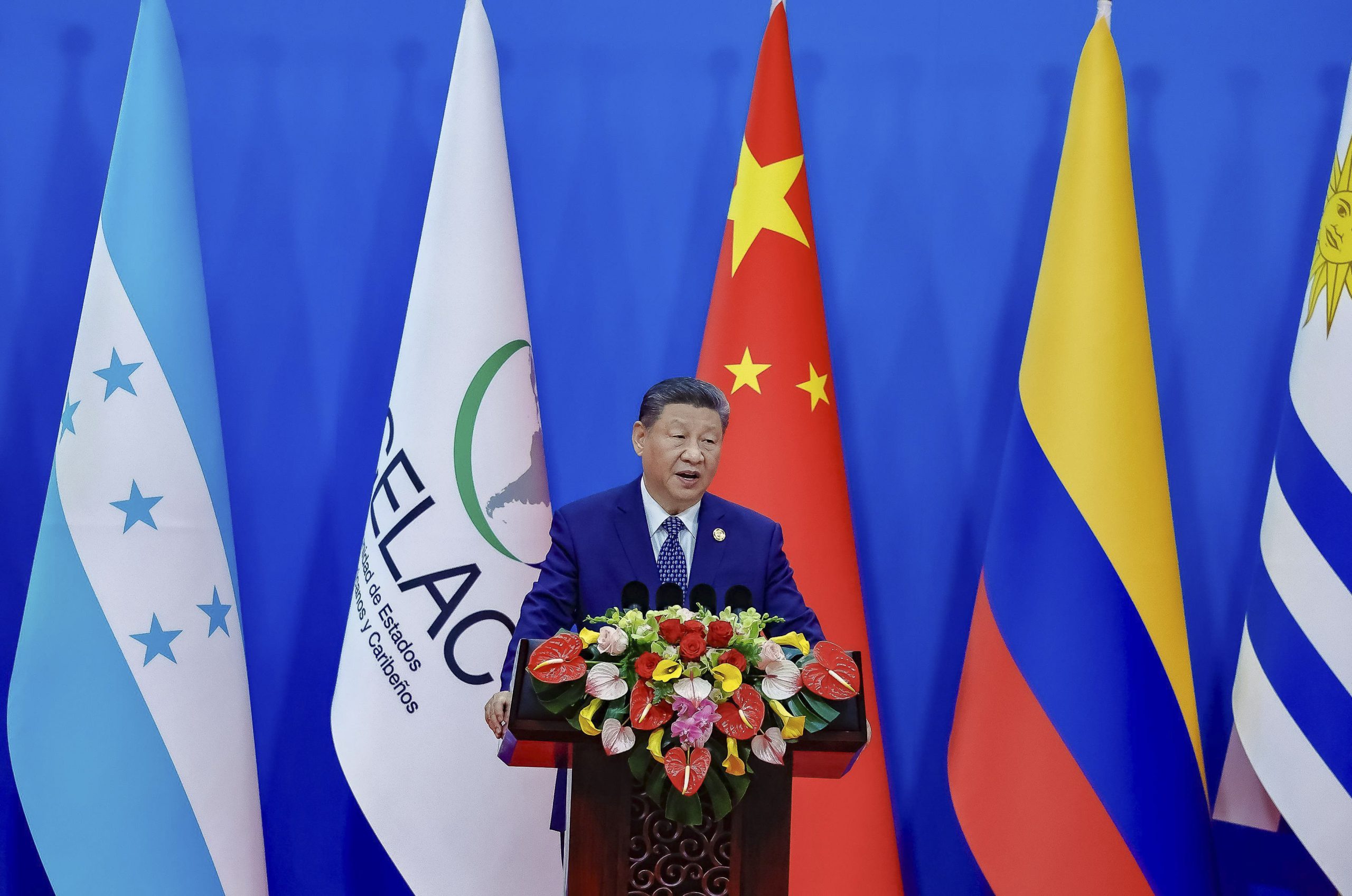
China’s political leadership further consolidated power, with Xi Jinping securing a third term and appointing Li Qiang as premier. Military purges and a stronger focus on national security reinforced party-state control. The cancellation of the annual press conference at the 2024 National People’s Congress reduced transparency and access to information.
After lifting COVID-19 restrictions in early 2023, the initial rebound faded and structural weaknesses resurfaced, including weak domestic demand, deflationary pressure, a real estate crisis, and collapsing FDI. Government stimulus had limited success in restoring private sector confidence. Official 2024 GDP growth of 5% was criticized due to economic uncertainty, job losses, and business struggles. Renewable energy capacity, particularly wind and solar energy, rose sharply, and exports increased at the end of 2024. Pension reform raised the retirement age as of January 2025 in response to demographic change.
Government efforts to promote the private sector while maintaining state control by stimulating investment and domestic technology despite trade restrictions have had limited success. Social tensions resulted in violent incidents. Tensions with the United States and EU intensified over technology and trade. China prioritized technological self-sufficiency and deepened cooperation with Russia and the Global South. Military tensions increased in the Taiwan Strait and South China Sea.