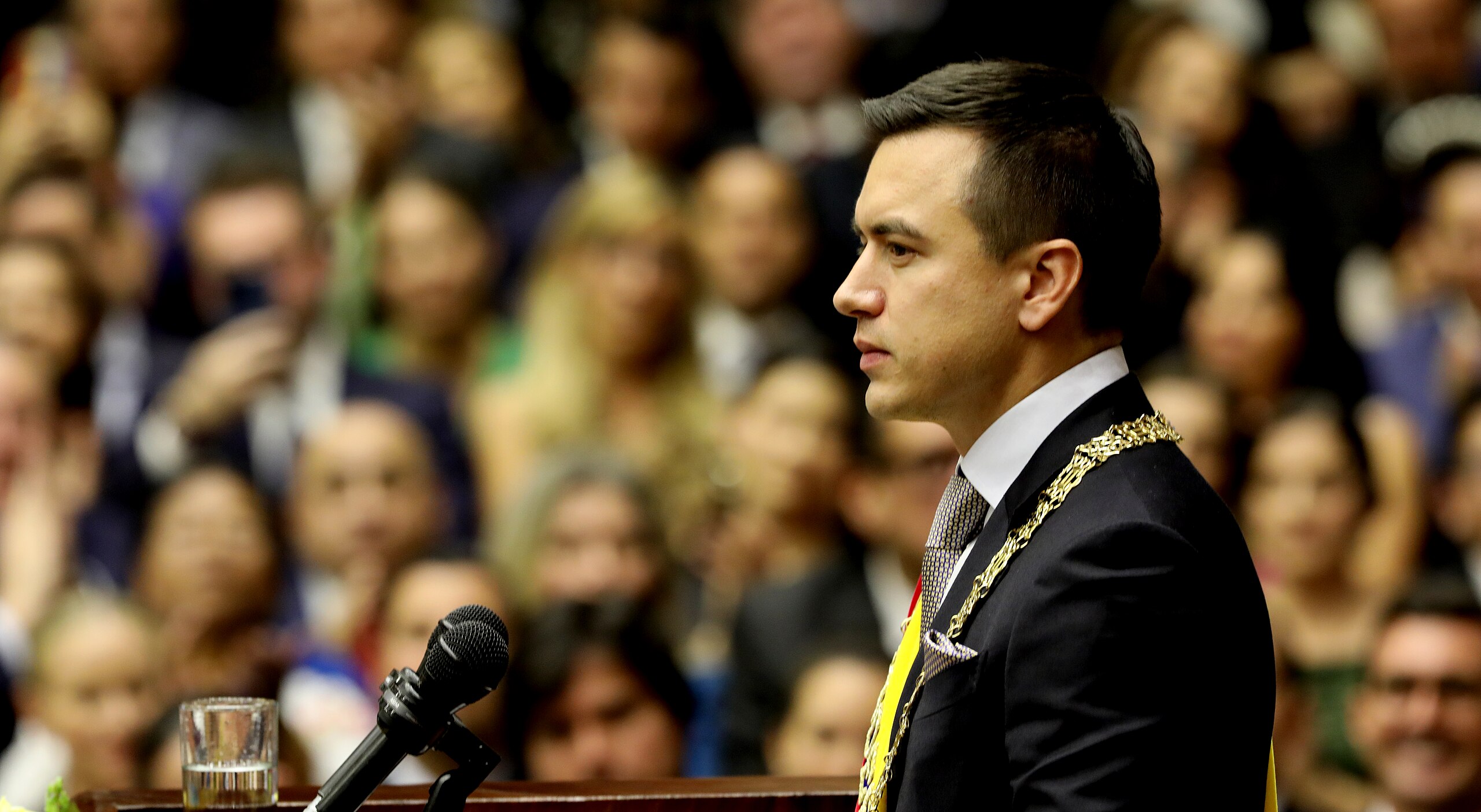
Ecuador faced a severe governance and security crisis as criminal organizations expanded their social and political influence. Rising violence, high-profile assassinations and prison massacres exposed the state’s inability to maintain the rule of law. Political institutions were further weakened by corrupt networks infiltrating parties, the judiciary and the administration. After dissolving parliament, Daniel Noboa won early elections but has governed with improvised and at times self-interested measures.
The economy remains fragile and unable to generate inclusive growth. Widespread poverty and limited opportunities increase the risk of recruitment by criminal groups and persistent emigration. Illegal economies linked to drug trafficking, mining and human smuggling continue to flourish, while fiscal pressures and weak investor confidence constrain policy responses.
Governance challenges intensified as the government relied heavily on states of emergency and militarized security policies. These measures temporarily reduced violence but did not address the structural drivers of criminal power. Limited state capacity, institutional erosion and diplomatic missteps have further undermined government effectiveness.